Now fifty years as an artist sounds like a long time as you try to sum it up, hard to reduce to a few neat paragraphs. It’s not just a career; it’s a whole lifetime of little moments, lucky breaks, detours, Sometimes just being there and taking a chance. Almost a Forrest Gump approach.
Many things, though remain clear as if they happened yesterday. The first time I saw how a few brush strokes could somehow look exactly like the real thing. For me, it’s as if a light was flipped on in a dark room. Seeing how a few lines on a page could suddenly turn into a face, a street corner or a cat curled up in the sun. Almost a magic trick. And it’s a great feeling when you can make things move — a runner in mid-stride, a car flying past, a bike messenger blasting through a crosswalk.
But the real magic isn’t just making something look real. It’s getting a viewer to react. Feel exhilarated, maybe tense, maybe a little sad. If there is a story that someone else can pick up on, that’s when you know the picture is working.
Becoming an artist took a bit. I trained in classical drawing eight hours a day, every day for years until it was second nature. And I’ve had just about every art job you can imagine. I’ve drawn tourists’ portraits at Disneyland outfitted in a pirate costume. I’ve done tight pen-and-ink illustrations of sports cars for Motor Trend, album covers and posters for CBS Records, on site courtroom and crime drawings for NBC and CBS News, sketched Olympic events for ABC, and editorial assignments for The New York Times and just about every other media outlet that’s called New York home.
In between, I was showing paintings wherever I could – East Village art spaces, Madison Avenue galleries, Paris, Japan, Germany. My work ended up in exhibitions at The Museum of the City of New York, the New-York Historical Society Museum, the Asia Society, MoMA, The Aldrich Museum and The Butler Institute of American Art.
And yet, whether you’re doing a courtroom sketch under a two-minute deadline or hanging a canvas in a museum, the process feels the same. You start with a blank surface, make a mark, make another, enjoy the process and let the narrative come through. Often, you get a painting that just works. You don’t even know why — it just does. Those are the great days. But there can be a high failure rate also. Sometimes the marks are all there but the final canvas says nothing. You have to know when it’s time to paint it over. Start again.
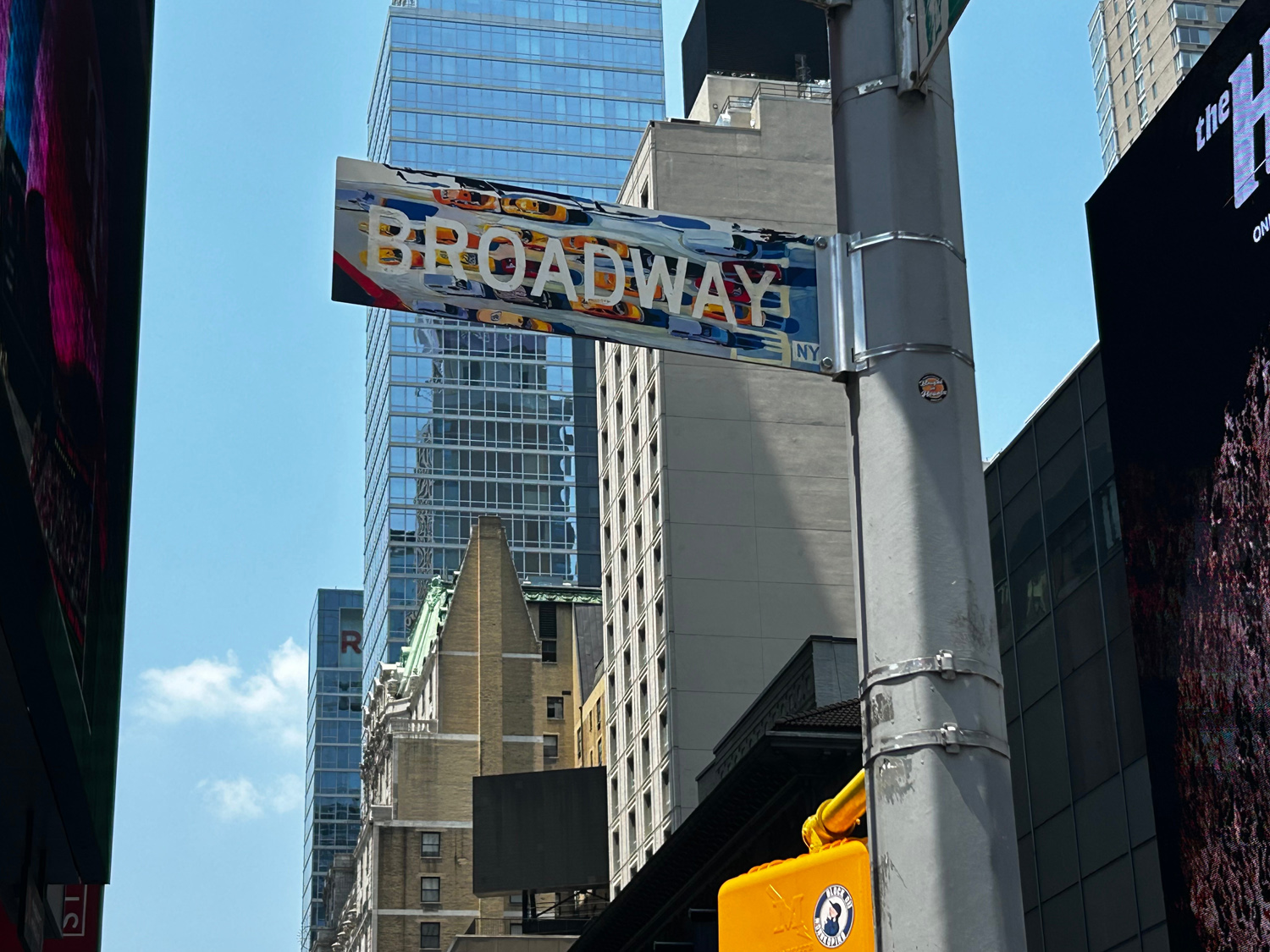
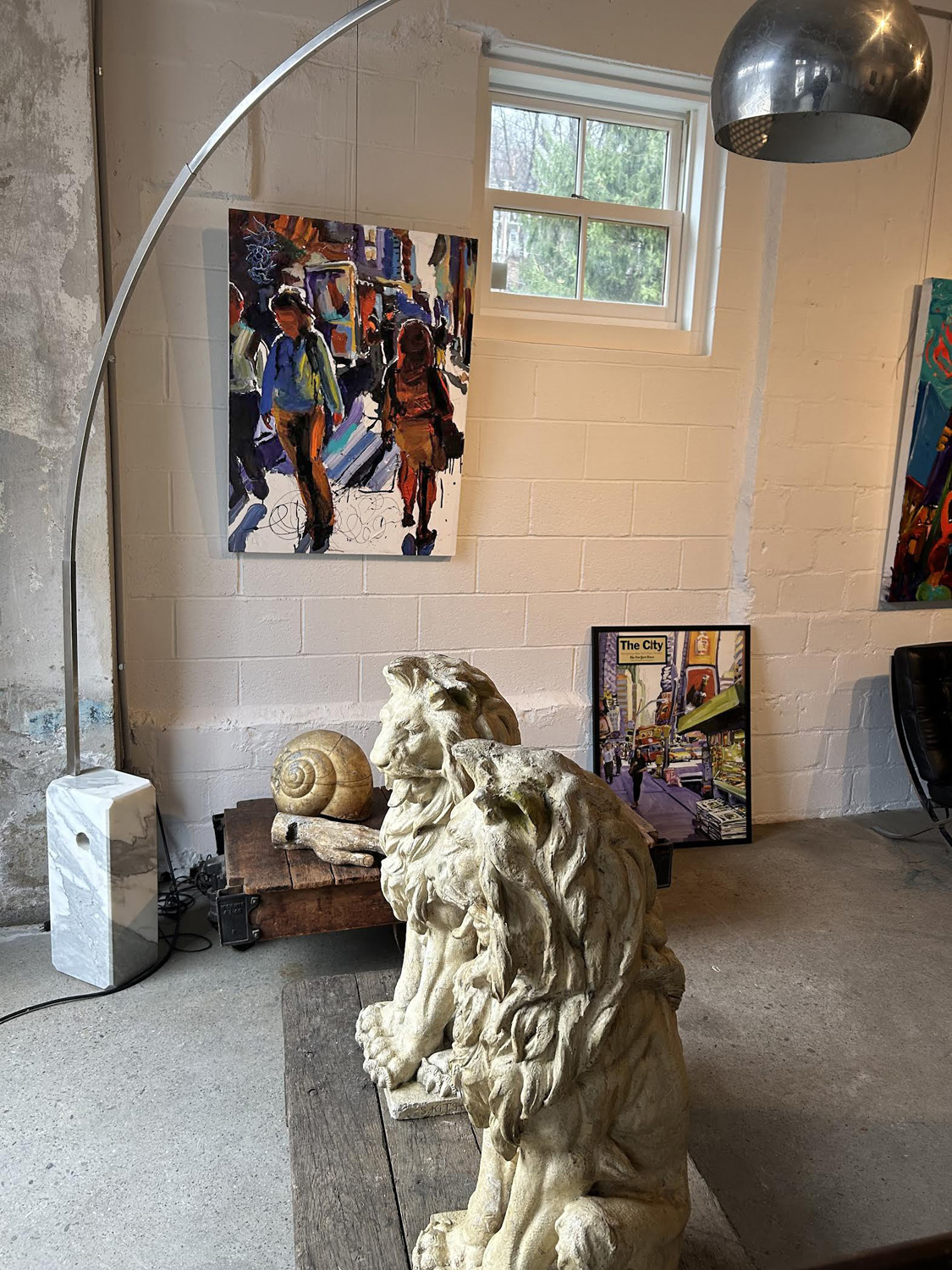
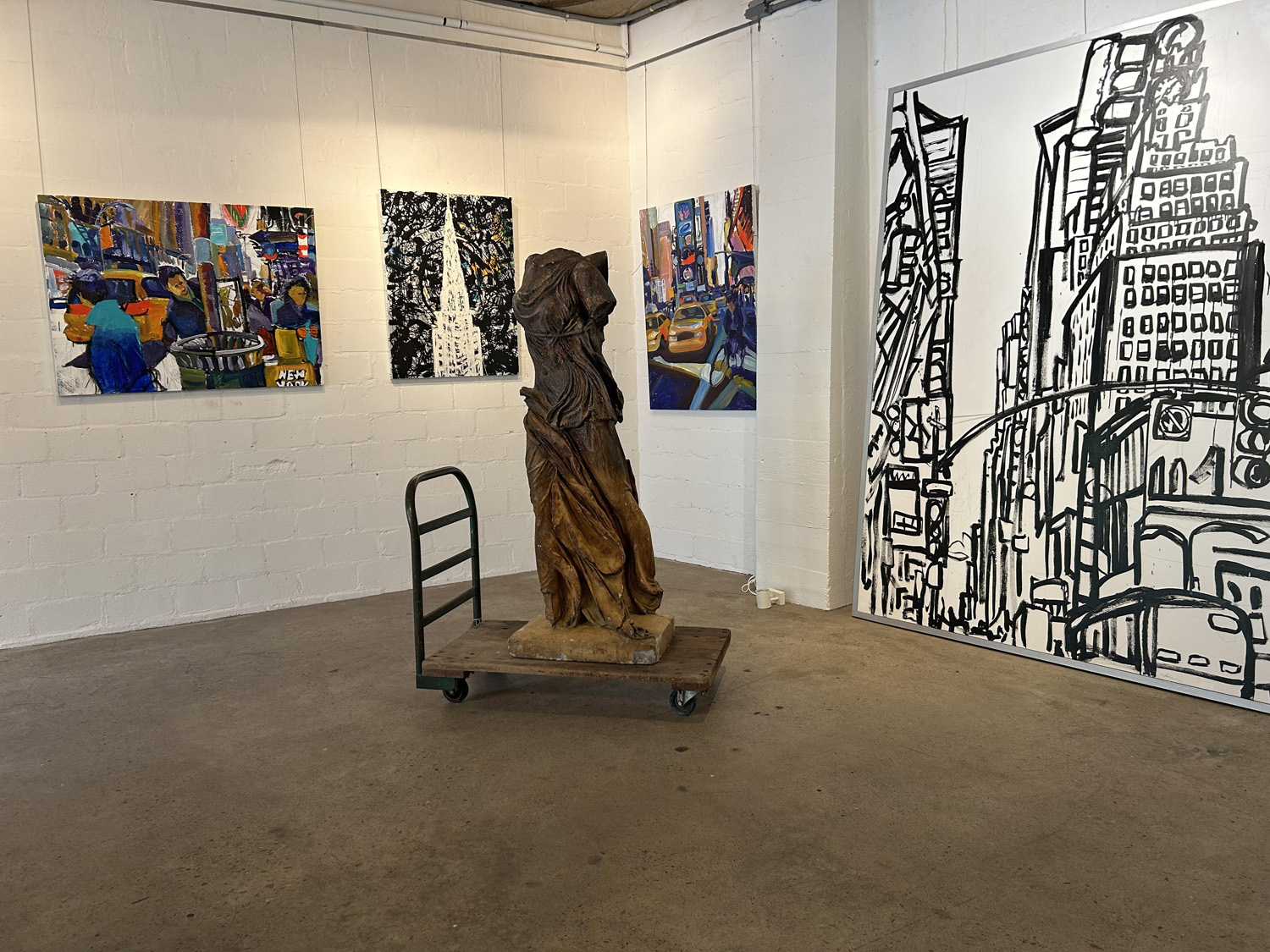
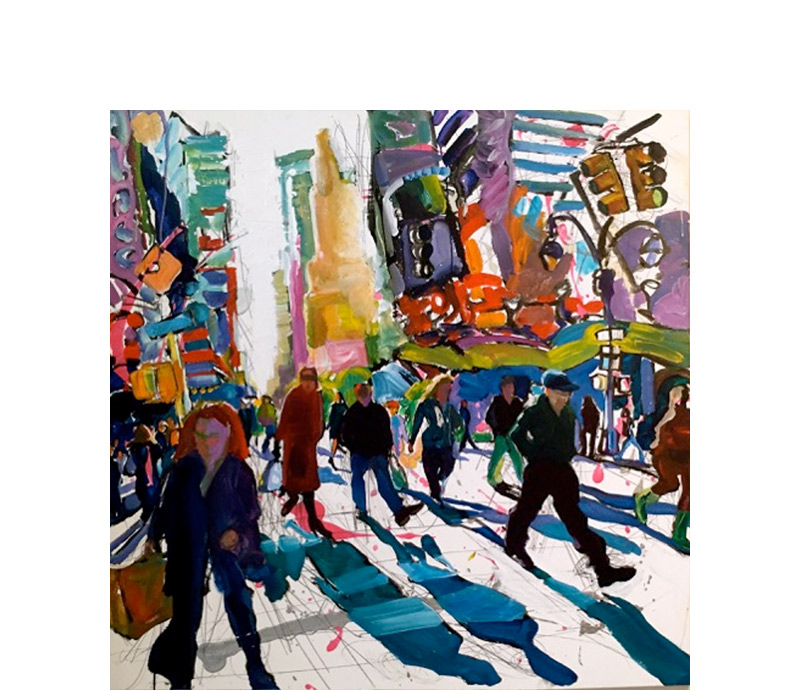
The paintings that “just work” for me often have something in common: they feel like old New York. Not the Instagram version with the curated graffiti and rooftop bars — the real thing. The New York of corner delis with flickering neon signs, lunch counters where the guy behind the counter knows your name, kids playing stickball in the street, the faded paint on tenement walls. I paint stoops that could tell you a hundred years’ worth of stories, subway platforms where the air smells like metal and rain, diners that haven’t changed the menu since 1973. The decades right after the glamorous City that once belonged to F. Scott Fitzgerald, Cole Porter, Frank Sinatra, and The Gershwins. Maybe just after the Midnight Cowboy and Taxi Driver era.
People see these paintings and you can almost hear it in their voices: “Oh, I remember that.” They’re not just seeing a building or a city block; they’re seeing a memory. Maybe it’s walking home from school past the bakery that used to give out free rolls. The way the light and long shadows looked streaming down a wide avenue in late afternoon. Even if they didn’t live here back then, they know the idea of it — and they miss it.
That’s the funny thing: the New York I’m after now is still here if you know where to look, but you’ve got to really look. A lot of it has been smoothed over, replaced, redeveloped. Painting it feels a bit like rescuing it, even if just for a moment on canvas.
I try to paint and not think about it. Trust your instincts. A reporter asked Derek Jeter what he thought about when playing shortstop for the Yankees. He looked surprised and answered: “I don’t think about anything. I have no thoughts whatsoever.” That’s the zone you want to be in.